PI-TSAD: Detecting Keyhole Collapse
Photodiode-based detection validated against synchrotron X-ray labels and transferred to eight commercial builds without retraining.
I developed PI-TSAD, a physically informed time-series anomaly detector, to identify keyhole collapse from photodiode signals during laser powder bed fusion.
- Analyzed 200 kHz photodiode data and selected a 0.25-30 kHz filter to isolate melt-pool dynamics.
- Extracted statistical and frequency-domain features and trained a Random Forest classifier to identify collapse events.
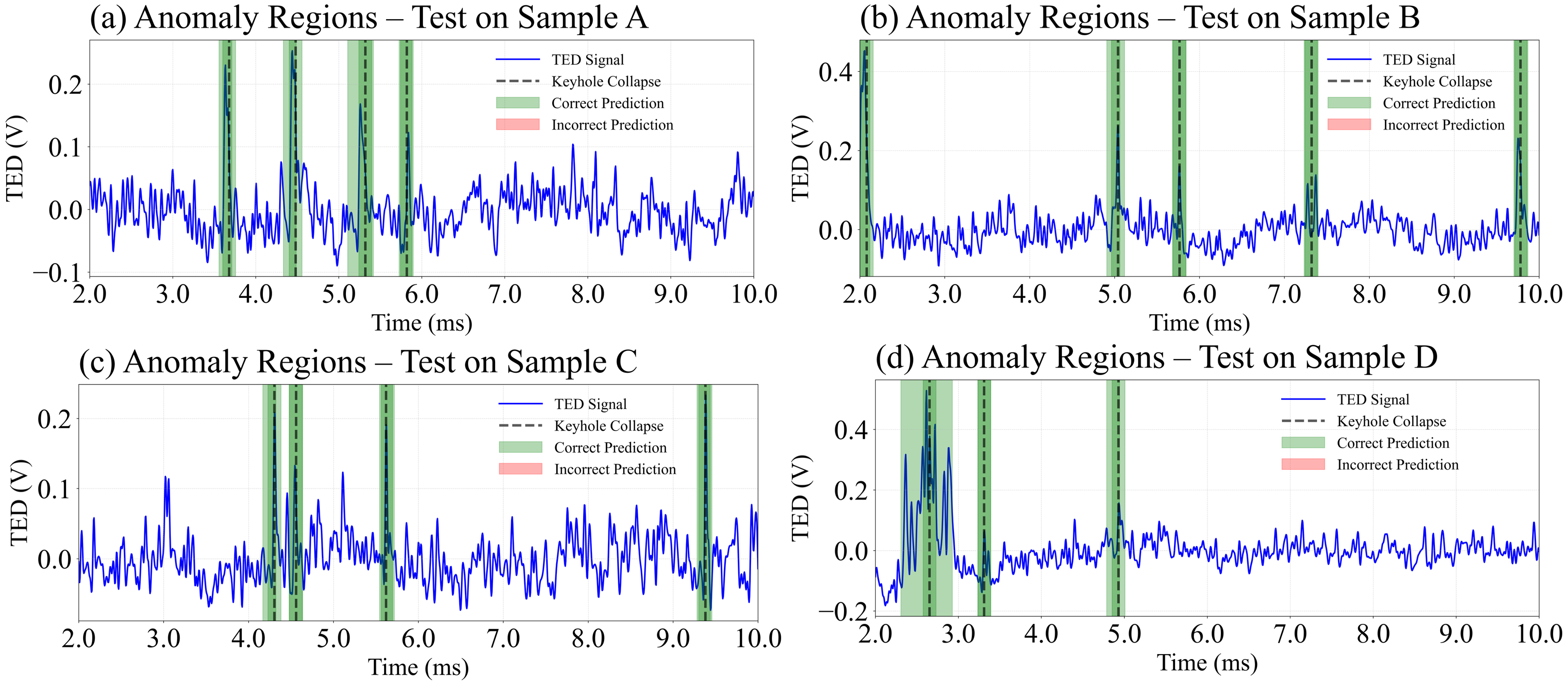
- Validated event timing on four held-out melt tracks against synchrotron X-ray labels from the Advanced Photon Source (APS).
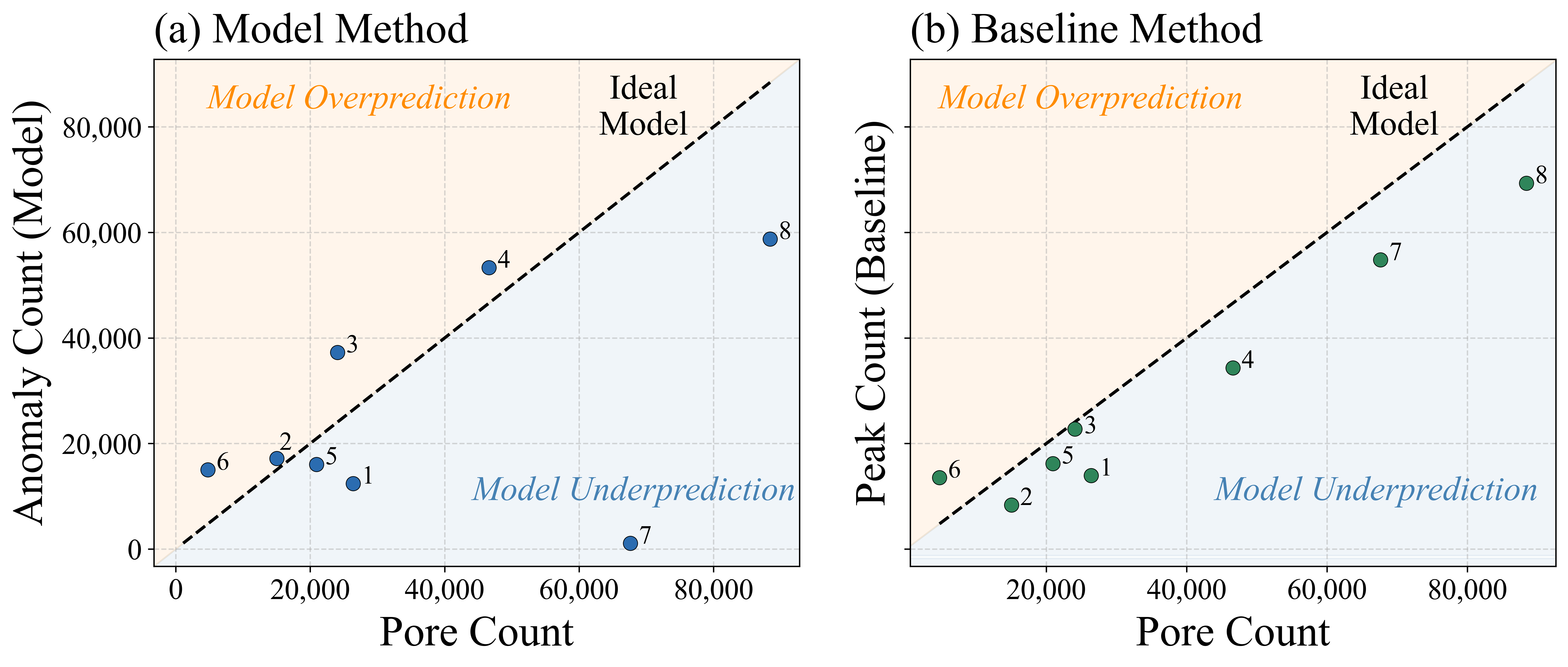
- Transferred the detector to eight AlSi10Mg builds on a commercial DMG MORI LASERTEC 12 SLM without retraining.
Across the commercial builds, anomaly counts followed the CT pore-count trend. The lack-of-fusion sample exposed a limitation: a detector trained on keyhole collapse does not capture every mechanism that produces porosity.
This first-author work was published in the Journal of Manufacturing Processes (2026) and received the NAMRC Outstanding Paper Award in Manufacturing Processes and Student Research Presentation Award.